Sunday, March 9, 2014

A Mystery Vegetable


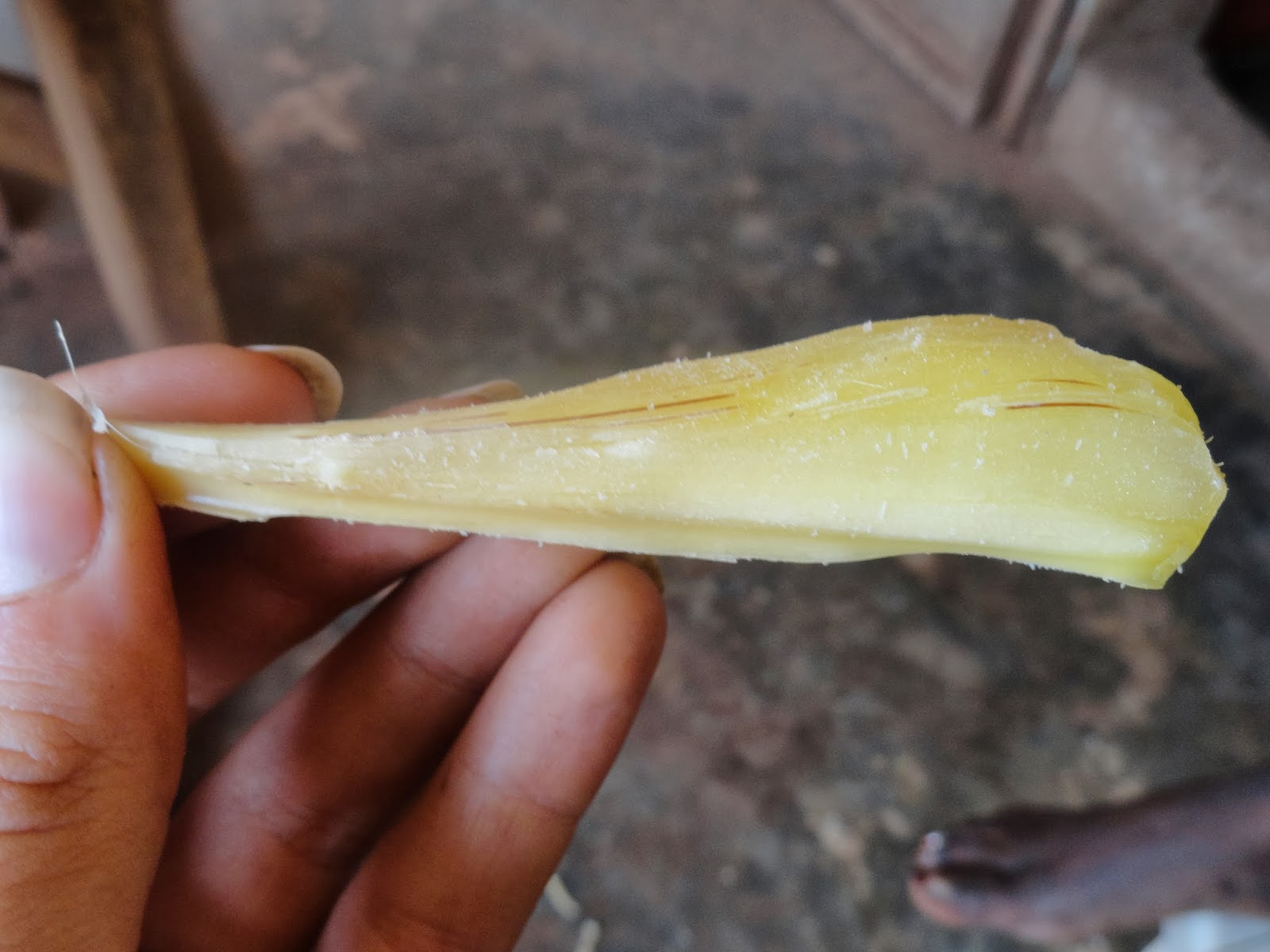
The vegetable below is one that I have encountered periodically on trips to Cotonou. It tastes somewhat like a potato and is fibrous. It is served prepared (cooked and sliced) as shown below and is always accompanied by slices of coconut. Since I had only seen it in this form, I have always wondered what the actual vegetable looks like before preparation and what it is called.


Then, a few weeks ago, I came across this vegetable in village and I finally got to see it in its natural form. The photo below shows the vegetable after it has been pulled out of the ground and boiled, but before it has been peeled and sliced.


Now that I have seen the vegetable in its natural form, that just leaves the question of its name. Do any of you Africa aficionados out there know what it is called?

Saturday, March 8, 2014

A-Hunting We Went

On Thursday, I went hunting for the first time in my life. I had called a friend in the late morning to see if he could help me with a project at home, but he was unavailable because he had plans to hunt, so I convinced him to let me tag along.

My friend warned me in advance that there would be a lot of walking, yet I was unprepared for the death march it turned out to be. We were out during the hottest part of the day, from 12:30 to 3:30 pm, in triple-digit heat under the direct sun. We walked at a fast pace, the fastest I could walk without jogging. The terrain was rugged nearly the entire way and most of it was through plant life with thorns and burrs. I was wearing sandals and capris, as I always do, and my feet got sliced so much that they were bleeding most of the time and I had to pick splinters out of my feet when I finally got home.

Given that I was already exhausted simply from walking so quickly under the hot sun, I could not fathom how the others found the energy to run at prey when they spotted it. There were perhaps 40 people in our hunting party, along with 10 or so dogs, and the group spread out to cover more territory. Each person was armed with a few branches, each 2.5 feet long, and often a slingshot. The branches were often weighted on one end with a knot of wood, and when prey was spotted, these batons were flung into the air, spinning round and round like a boomerang. After a few batons had struck the prey, often, but not always, a dog would charge in to finally catch the animal.

Hunters running after an animal that has been spotted
Ultimately, most people in our hunting party seemed to have caught something, either a rabbit or bird, from what I saw. My friend killed two animals. He said he usually eats his kills, but sometimes he sells them instead. I came home with nothing, as I intended. I had simply wanted to witness the hunt.

Two hunters displaying their kills: a rabbit for the man on the left and a bird (somewhat hidden by his hand) for the man on the right
The next day, I was fascinated to discover that my participation in the hunt was the talk of the town. Several people told me that they heard I had gone hunting and asked if it was true. Only men hunt in Sonsoro, which made my participation even more unusual. One woman told me that I should never go hunting again because as a woman, I have no business doing so. That, of course, only made me want to go hunting again to prove a point, but given how miserable I found the experience, I think my hunting days are indeed over.

Friday, February 28, 2014

Benin on Jeopardy!

"Benin There" was a category on Jeopardy! last night. Do you know the answers?

$800
Majestic elephants & this scavenger, Canis Aureus, share W National Park, named for the shape of bends of the Niger River

$1000
If a tree grows in Benin, it might be the karite, which produces the skin restorer called “shea” this

$600
Vodun, still the faith of many in Benin, came from the area to the Western hemisphere, where we call it this

$400

On a December morning, your sinuses may be irritated by a harmattan, this, but it only lasts until March

They ran out of time for the $200 question.

If you want to watch the episode yourself, here is the YouTube video:
http://www.youtube.com/watch?v=IrI3kfFMLsk

Sonsoro Girls' Camp

Last June, I wrote about a girls' camp hosted in Kandi by the region's Peace Corps volunteers. I was very pleased with the camp, yet disappointed to only be able to send three girls, so this year I decided to host a girls' camp in village. This three-day village camp was held at the beginning of this week, and 29 girls attended.

In many regards, the camp followed the same format as the Kandi camp. We taught the girls about health (malaria, hygiene & sanitation, nutrition, HIV/AIDS, puberty, and more), we brought in guest speakers to inspire the girls to continue their education and pursue dynamic careers, and we threw in a few fun activities (friendship bracelets, frisbee, etc.).

However, I changed one major thing about the camp: I designed it so that it would be easier to replicate by my community even without a Peace Corps volunteer. This meant one major difference from the Kandi camp: no external funding. While the Kandi camp was funded with a $2000 grant, I intentionally had no grant and instead sought community donations. We saved money by holding the camp in village (meaning no money needed for lodging, transport, or food), and we received donations of t-shirts for each girl, free snacks for the last day, free use of a sound system and generator for a post-camp party, and more.

Another innovation is that I turned my star camper from the Kandi camp into my assistant. We met weekly to plan this camp and she helped me develop the schedule and decide which guest speakers to invite. During the actual camp, she taught and led songs and games, conducted a lesson on malaria, and provided organizational support.

Overall, the camp was a roaring success. Some members of the community are already discussing how to run such a camp every year (without the help of foreigners, Peace Corps or otherwise). Now that's the kind of sustainable development we are supposed to be promoting as Peace Corps volunteers!

Here are some photos from the camp:


The girls are making friendship bracelets.

The girls just finished making a mud stove. This design saves trees by using less wood (as fuel) than the regular model.
Our guest speaker is singing with the girls.

The girls are performing a skit about mosquito nets during our closing ceremony.
Another improvement I made to the camp model was to invite the girls' parents to the closing ceremony. The parents are seated on the left while the girls sing on the right.


Thursday, February 20, 2014

Living without Electricity - Part I

For those who wonder how we get by in Sonsoro without electricity, today I am offering you a small glimpse. Below are two photos of our vaccine refrigerator at the health center. The cooling is powered by kerosene, hence no electricity required.

A similar system applies to the refrigerators in the town's buvettes, the local drinking establishments that offer beer and soft drinks. Instead of kerosene, they attach a gas tank to their refrigerator, the same gas tank that would be used to power a gas stove.


My colleague is getting ready to add more kerosene.


Look closely on the left and you can see the flame.

Sunday, February 9, 2014

Red Flower Sauce: Part II

This is the second half of last week's post. This week, cooking the red flower sauce itself.


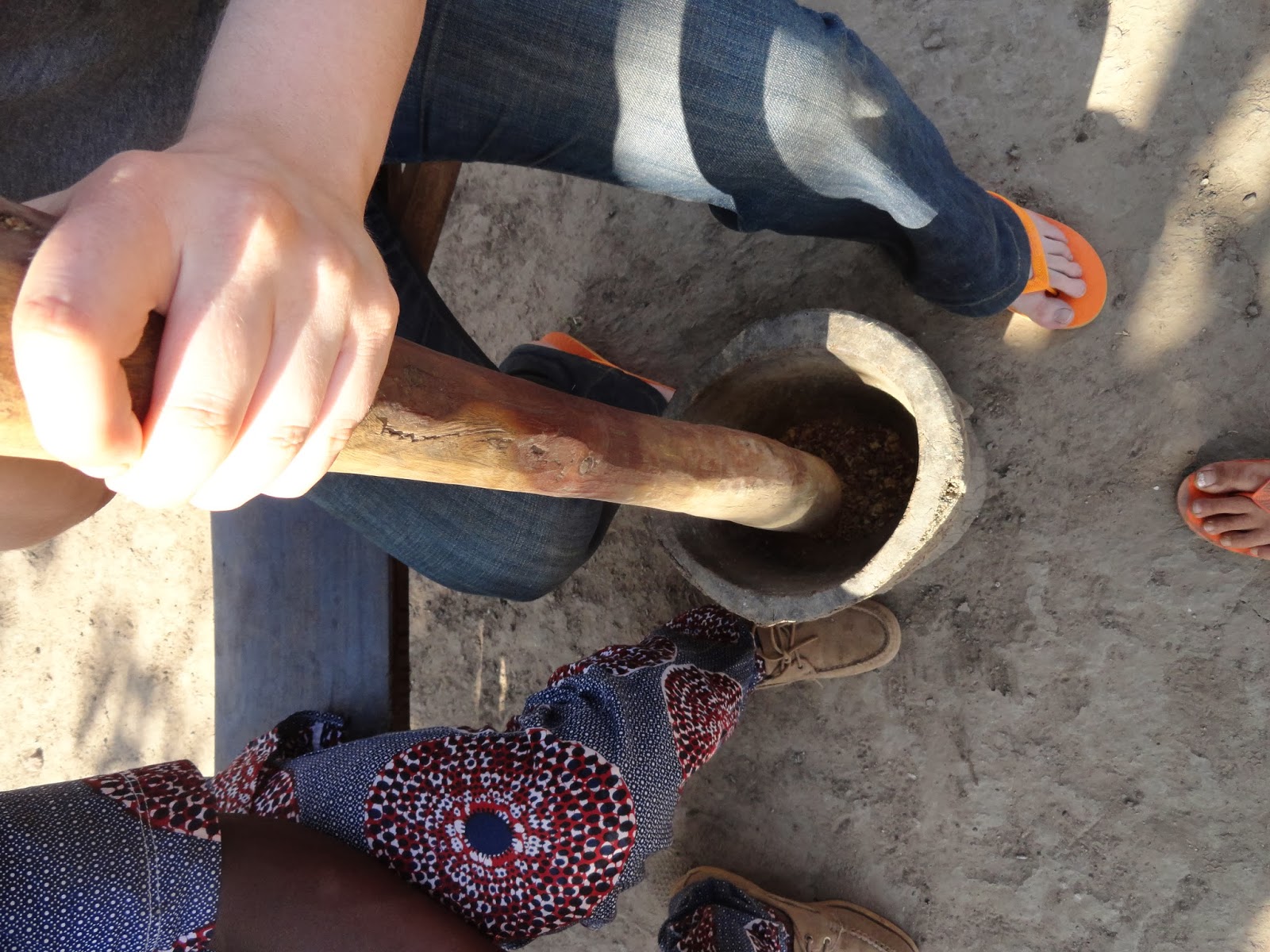
First, pound the dry flowers into a powder.

Those once brilliant red flowers end up in a powder like this.

Puree the sauce ingredients (peppercorns, garlic, etc) on this grinding stone.

One by one, add the ingredients to the sauce: first oil, then tomato paste, then the pureed "sauce ingredients"...


...and finally the red flower powder itself. We did not use much (1/8 cup at most). The powder thickens the sauce, so too much would make the sauce too thick. The rest of the powder was saved for another day.

When the sauce is done, eat it with a ball of akassa. Bon appetite!

Sunday, February 2, 2014

Red Flower Sauce: Part I

A few weeks ago, I collected flowers with a village friend for a sauce we later made together. Since I have a number of photos for this process, today I will just post the flower part and save the cooking of the sauce for a future post.

This is the tree that produced the flowers for our sauce. We collected the flowers that fell on the ground.

A close-up of a flower

Many flowers for our sauce

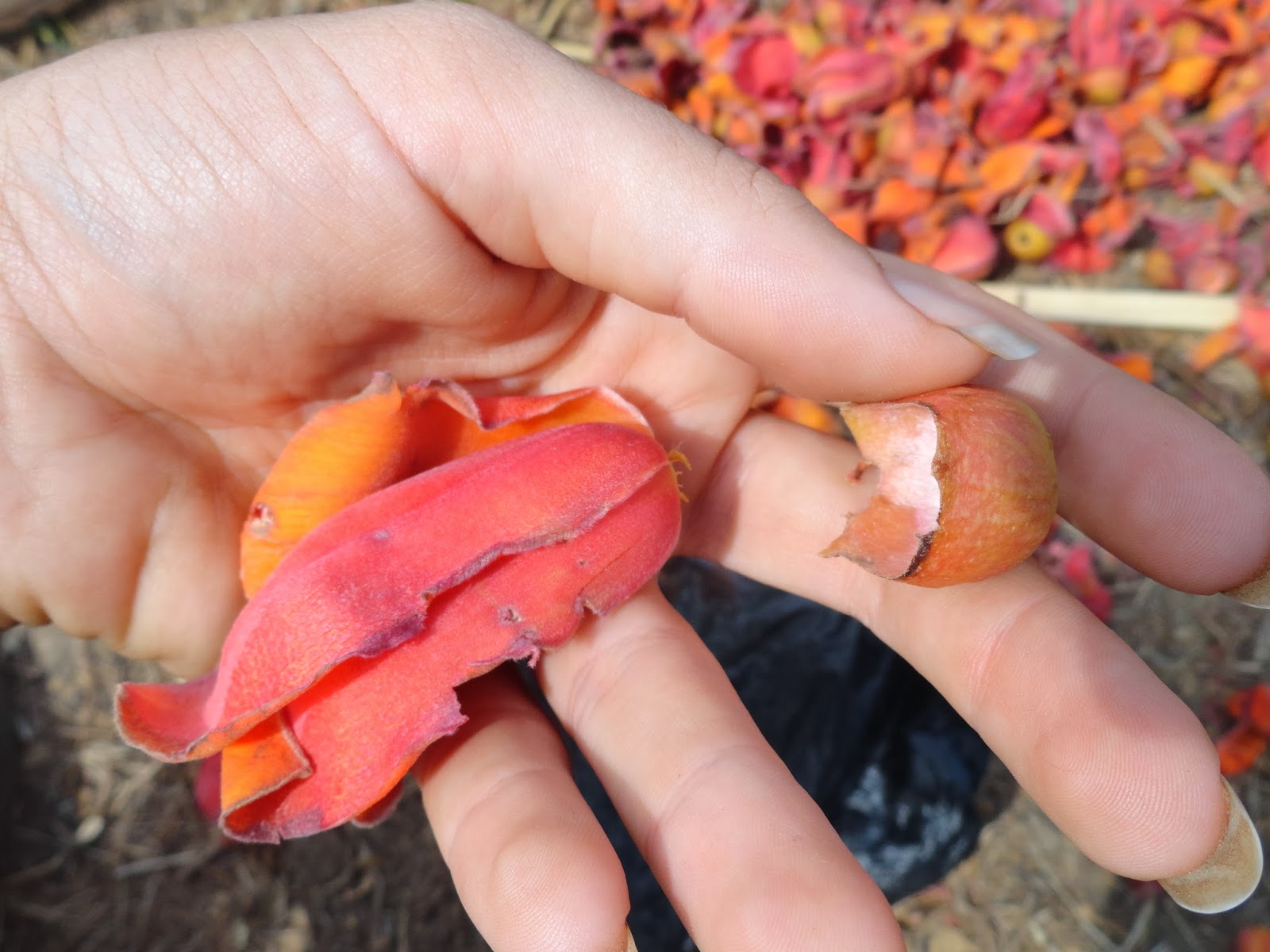
We separated the bottom part of the flower from the petals. Only the bottoms are used for the sauce.

We set the flower bottoms aside for a few days to dry.
Several weeks later, the flowers were all gone from the tree. Good thing we collected them in time!